Why Custom Web Design Is Worth It for Small Business Websites
Small businesses feel every dollar they spend. There is no giant marketing budget to hide a weak decision, and there is no room for a website that looks decent but fails to pull its weight. That is exactly why custom web design deserves serious consideration.
A lot of owners start in the same place. They choose a template, swap in their logo, edit a few paragraphs, and publish. At first, that feels efficient. It is fast, affordable, and good enough to get online. Sometimes it truly is the right starting point. But after a few months, the cracks show. The site does not rank well. Visitors do not stay long. Calls are sporadic. The mobile version feels clumsy. Updating pages becomes a chore. What seemed cheap at launch starts getting expensive in lost leads and constant workarounds.
Custom web design solves a different problem than a template does. A template helps you launch. A custom site helps you compete.
That difference matters more than many small business owners realize.
A small business website has a job to do
For a local service company, a retailer, a consultant, or a medical practice, a website is not a decorative asset. It is part salesperson, part receptionist, part credibility check. People arrive with questions in mind, and they make snap judgments quickly. If the site feels confusing, generic, or dated, trust drops before anyone picks up the phone.
I have seen this play out with businesses that were excellent at what they did offline but looked ordinary online. Their site buried the most important information, used stock photos that matched ten other competitors, and offered no clear reason to choose them. The owner would say, “But our work is better than theirs.” That may be true, but your website has to prove it to someone who has never met you.
Custom website design for small business is valuable because it starts with that real-world goal. It asks practical questions. What does a prospect need to know in the first ten seconds? What objections stop them from contacting you? Which service pages deserve their own strategy? What path should a mobile visitor follow if they are standing in a driveway, comparing three companies at once?
Templates rarely begin there. They begin with a layout.
That sounds subtle, but it changes everything.
Templates save money upfront, custom design makes money over time
The argument for templates is easy to understand. Lower cost. Faster launch. Less complexity. For some businesses, especially very new ones, that can be enough. If you need a temporary online presence while you validate an idea, a template may be perfectly reasonable.
The problem comes when owners confuse “lower cost today” with “better value.”
A custom website usually costs more at the beginning because it requires strategy, wireframing, design decisions, tailored content structure, development work, testing, and refinement. That process is not waste. It is where the performance comes from.
Think about what a stronger site can affect:
- more qualified leads from search
- better conversion from existing traffic
- less friction on mobile devices
- stronger trust through clearer messaging
- fewer redesign costs in the near future
One extra customer a month can justify a meaningful portion of a website investment, depending on the business. For a law firm, remodeler, dental office, or B2B service company, one new client may cover the difference between a cheap site and a well-built custom one. For an ecommerce brand, even a modest lift in conversion rate can compound fast.
This is why experienced owners stop asking only, “What does the site cost?” and start asking, “What is this site supposed to produce?”
That shift leads to better decisions.
Your business is not generic, so your website should not be
Every market has copycat websites. The same hero image style. The same bland headlines. The same menu structure. The same predictable stock language about quality, integrity, and customer service. Nothing is technically wrong with those sites, but they disappear into the category.
That is a serious problem for small businesses, because small businesses often win on personality, specialization, and local reputation. Those strengths are hard to express through an off-the-shelf design that thousands of others use.
Custom web design creates room for specificity. A good designer can shape the experience around what makes the business distinct. Maybe that is a fast emergency response process. Maybe it is a premium service model. Maybe it is a calm, trust-building experience for patients who are nervous. Maybe it is expertise in a narrow niche competitors barely understand.
When the design supports those strengths, the site feels coherent. The visuals, copy, page flow, and calls to action all point in the same direction. Visitors do not just learn what you do. They understand why you are the right fit.
That clarity is persuasive in a way generic polish never is.
Custom design improves conversion, not just appearance
Many business owners talk about design as if it were mostly visual. Color palette, typography, photos, spacing. Those things matter, but conversion usually depends on structure more than style.
A custom site can be built around the actions you want people to take. That includes where proof appears, how service pages answer common objections, how forms are simplified, how phone-first visitors move through the site, and how information is layered so people never feel lost.
For example, a local HVAC company might discover that emergency visitors behave very differently from maintenance-plan shoppers. Emergency visitors want speed, phone number visibility, financing information, and confidence that someone will answer. Maintenance-plan shoppers may care more about benefits, long-term savings, and scheduling. A custom website can serve both audiences without making either one work too hard.
The same principle applies to professional services. A generic homepage that tries to say everything to everyone usually says very little. A custom approach can segment audiences and guide each type of visitor toward the next sensible step.
I have also seen small changes create meaningful improvements. Moving trust signals higher on the page. Rewriting button copy to reflect buyer intent. Reducing the number of required form fields. Turning a vague service page into a page that explains process, timeline, pricing context, and outcomes. None of that is glamorous, but it is where results often come from.
Good web design is business strategy translated into screen behavior.
Search performance benefits from custom structure
Search rankings depend on more than design, but design decisions affect SEO more than many people think. If your site architecture is sloppy, your content is thin, and your pages are hard to navigate, you are making search visibility harder than it needs to be.
Custom web design allows you to build a structure that reflects how people actually search. Service-specific pages, location pages where appropriate, clean internal linking, logical heading hierarchy, and content layouts that support scannability all contribute to stronger organic performance over time.
This is especially important for local businesses. Someone searching for website design for small business may have very different intent from someone searching for a local provider by geography. A company serving a regional market may need pages that speak directly to the audience in that area. If your business operates in southeast Texas, for instance, a page built thoughtfully around web design The Woodlands can perform far better than a generic paragraph stuffed awkwardly onto a catchall page.
That does not mean churning out shallow pages for every town on a map. It means aligning the site with real demand and local relevance.
Custom sites also make it easier to support technical SEO basics, such as page speed, mobile friendliness, semantic structure, and image handling. Templates often come bloated with features you do not need. That extra weight can slow pages down, complicate maintenance, and weaken the user experience.
A leaner, purpose-built site has an advantage.
Mobile users notice every shortcut
Small business traffic is often heavily mobile. For some industries, it is the majority. Yet many template sites are designed on a desktop first and then squeezed into mobile layouts that technically function but do not feel pleasant to use.
That gap matters. A mobile visitor has less patience, less screen space, and often more urgency. If the phone number is hard to tap, if the menu is cluttered, if testimonials are buried, if the page jumps around while loading, you are losing business to someone whose site respects the mobile experience better.
Custom web design gives you control over mobile priorities. That means deciding what belongs first, what can be condensed, and what should disappear altogether on smaller screens. It means thinking about thumb reach, tap targets, sticky navigation, short forms, and load performance.
These are not tiny design details. They are practical sales decisions.
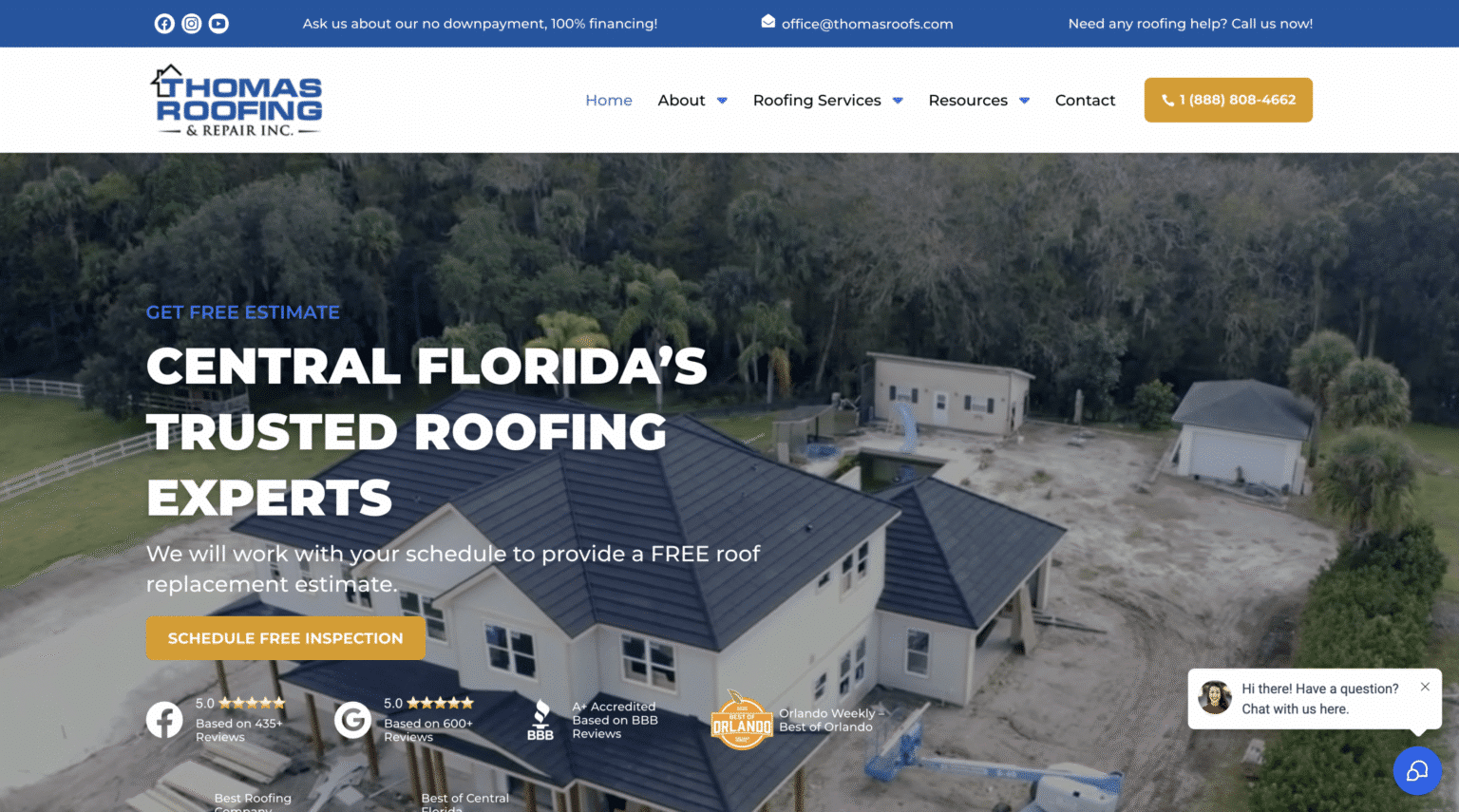
A roofing company owner once told me he could tell when a storm hit because traffic surged and calls spiked. During those periods, visitors were not browsing leisurely. They wanted immediate reassurance and an easy way to contact the company. On mobile, the site needed to support that urgency. A custom redesign that simplified the path to contact turned busy weather events into better lead capture. Same traffic, better outcomes.
That is the kind of return owners remember.
Your brand earns trust through consistency
Trust is built from dozens of small signals. Clear writing. Professional imagery. A strong visual system. Evidence of real work. Honest claims. Consistent interactions across pages. When those signals line up, the business feels credible. When they clash, even subtly, visitors hesitate.
Templates make consistency harder than they seem. A business owner or office manager ends up modifying pages one by one, often without a system. New fonts creep in. Button styles shift. Spacing varies. Some pages feel polished, others feel forgotten. The result is familiar to most people, even if they cannot name it. The site feels patched together.
Custom web design usually starts with a design system. That gives the business rules, not restrictions. Headings behave the same way. Buttons are consistent. Service pages follow a strong pattern while still allowing flexibility. Brand colors work across devices. Photography or illustration choices support the tone of the company.
For a small business, that consistency can make the company look larger, steadier, and more established than it might otherwise appear. That matters when prospects are deciding whether to trust you with thousands of dollars or an important personal need.
Custom design reduces the hidden cost of workarounds
Cheap websites often become expensive in strange ways. The owner cannot update a section without breaking something. Landing pages all have to fit the same awkward structure. Integrations require plugins piled on top of plugins. The staff avoids making changes because the backend is confusing. A simple request turns into a two-hour task.
Most owners do not account for this when they choose a lower-cost option. They focus on launch cost, not operational drag.
A custom site, when built well, can reflect how your team actually works. It can include flexible page sections that are easy to update, content management fields that make sense, and integrations chosen for the business rather than forced onto it. This reduces internal friction. It also lowers the odds that you will need a full rebuild just because your business evolves.
That flexibility becomes more valuable over time. Businesses add services, refine messaging, open locations, run campaigns, change staff, and respond to market shifts. A rigid site makes each of those moves harder. A custom one can grow with you.
Some businesses especially benefit from custom work
Not every business needs the same level of investment, but some situations strongly favor custom website design for small business.
If any of the following sound familiar, a custom approach is usually worth serious thought:
- your sales process involves trust, education, or higher-ticket decisions
- your services vary enough that visitors need guidance
- local search matters and you need targeted landing pages
- your brand is stronger than your current website suggests
- your template site already feels limiting or outdated
A home service company, private practice, law office, architecture firm, consultant, or boutique manufacturer often falls into this category. These businesses do not just need a web presence. They need a site that explains value clearly and turns interest into contact.
On the other hand, a brand-new side project with no proven offer may not need full custom work on day one. That is not a contradiction. It is judgment. The right investment depends on business stage, margins, competition, and goals.
The local factor changes the equation
Small businesses do not compete on the internet in some abstract sense. They compete in neighborhoods, cities, and service areas. That local context affects design, messaging, and SEO.
A business serving a sophisticated suburban market may need a cleaner, more premium presentation than a competitor in a different area. Expectations vary by audience. The pace of life, price sensitivity, and buying habits all influence what feels trustworthy and persuasive.
For businesses searching for web design The Woodlands, for example, the goal should not be scalablewebsites.com website design for small business to find someone who can make a site look modern in the abstract. The goal is to build something that speaks to local buyers, supports local search intent, and reflects the standard clients expect in that market. That might mean stronger service pages, neighborhood-specific proof, cleaner navigation, and a more polished visual presence.
Local competition is often tighter than business owners think. If five companies offer similar services within a few miles, the one with the clearest, fastest, most credible website has an advantage before any conversation begins.
Custom design is not the same as overdesign
One reason some owners hesitate is that they picture custom design as expensive theatrics, fancy animations, unusual layouts, and a lot of agency language. That fear is understandable, because some web projects do confuse originality with effectiveness.
Good custom web design is not about showing off. It is about fit.
Sometimes the best custom site is quiet, straightforward, and highly usable. A cleaner header. Better page hierarchy. Sharper copy. Real project photography. Faster load times. Simpler forms. Stronger service pages. Those choices may not look dramatic in a design award gallery, but they perform in the real world.
That is the version small businesses should want.
A custom site should feel appropriate to the brand and easy for the visitor. If it wins praise from designers but confuses customers, it missed the mark.
What to ask before investing
If you are considering a custom project, ask better questions than “How many pages do I get?” or “Can you match this competitor’s site?”
Ask how the site will support lead generation. Ask what the content structure should be based on user intent. Ask how mobile behavior changes the design. Ask what platform makes sense for your team. Ask how success will be measured after launch. Ask what can be phased now and what should wait.
Those questions reveal whether the provider understands business outcomes or only surface aesthetics.
It also helps to be honest about your own role. A strong custom project still needs input from the owner or team. The best insights usually come from actual customer conversations, recurring objections, top-selling services, and examples of what clients praise after the work is done. That material turns a decent website into a persuasive one.
The return is often bigger than owners expect
Owners who invest in custom web design are rarely excited about the abstract concept of design. They are excited about what a better site can unlock. Better leads. Better close rates. Better local visibility. Better first impressions. Less frustration internally.
That is why custom work tends to outperform its price tag when done thoughtfully. It does not just change how the site looks. It changes how the business is presented, discovered, and chosen.
For a small business, that is a serious asset.
The website is often the first meeting, and sometimes the deciding one. If your current site blends in, creates friction, or undersells the quality of your work, the cost is already there. It just does not show up as a line item. It shows up in missed opportunities, lower trust, weaker inquiries, and prospects who move on without ever reaching out.
Custom web design is worth it because small businesses need more than a place to exist online. They need a site that works as hard as they do.
Scalable Websites
Website design for contractors and small businesses
Based in Montgomery, TX, serving Montgomery County and greater Houston
Phone: (832) 979-2478
Website: scalablewebsites.com
Hours: Monday to Friday, 8 AM to 5 PM
Scalable Websites builds and manages mobile-first websites for contractors and small businesses on simple monthly plans, with hosting, security and unlimited updates included. Find us on Google.